
Casino gaming technology and cybersecurity innovation
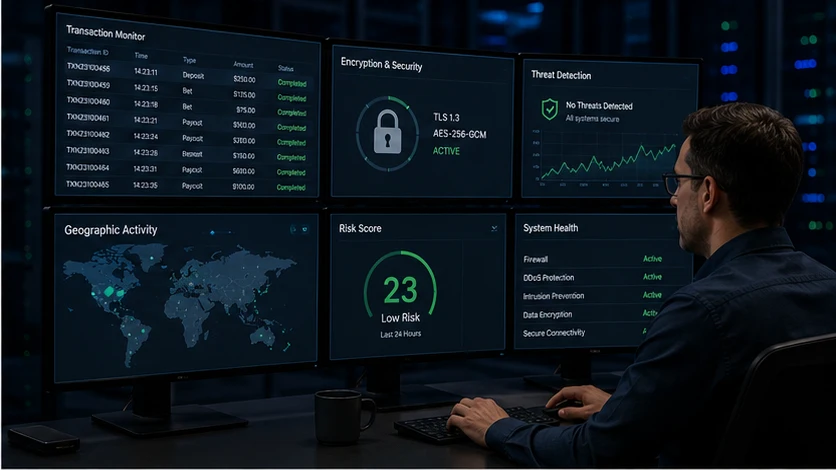
Casino gaming technology depends on cybersecurity because every platform handles sensitive account data, payment activity, identity checks, and real-time transactions. A weak security model can damage user trust, disrupt operations, and create regulatory exposure. For that reason, the sector has become a practical case study in encrypted payments, fraud prevention, cloud protection, monitoring systems, and secure digital platform design.
Security priorities in casino gaming systems
Modern casino gaming platforms use layered controls rather than a single defensive tool. Operators need to confirm user identity, protect sessions, prevent payment abuse, detect unusual activity, and preserve system logs for audits. These requirements mirror the cybersecurity priorities of fintech, e-commerce, and enterprise SaaS environments.
- Encryption protects payment details and personal information during transmission.
- Identity verification reduces account abuse and supports compliance obligations.
- Fraud detection tools flag unusual transaction and behavior patterns.
- Cloud security controls protect game servers, databases, and administrative systems.
- Audit logging creates evidence trails for internal review and regulatory checks.
Controls and outcomes
Cybersecurity innovation in this field is measured by operational outcomes: fewer account takeovers, stronger payment integrity, safer administrative access, and faster response to incidents.
| Security control | Primary purpose | Operational benefit |
|---|---|---|
| Encryption | Protect sensitive data | Safer payments and accounts |
| Multi-factor access | Verify administrators | Reduced internal risk |
| Fraud analytics | Detect abnormal activity | Faster investigation |
| Cloud monitoring | Track infrastructure health | Improved incident response |
"In casino gaming technology, cybersecurity is not an add-on feature; it is part of the product architecture."
Lessons for other industries
The casino gaming sector demonstrates how regulated platforms can combine security and usability. Customers still expect quick access, fast payments, and smooth digital experiences, while operators must maintain strict controls behind the scenes. This balance is relevant to any company building transaction-heavy systems where trust, compliance, and platform performance must work together every day.